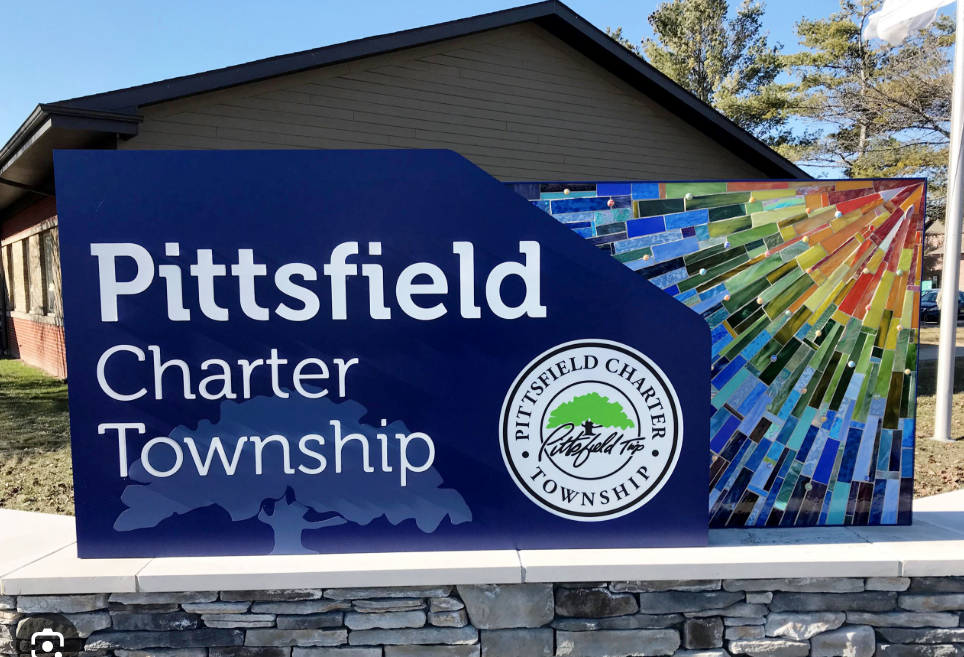
Pittsfield Township as a Case Study in Michigan’s STR Crossroads
A Policy Perspective from the Michigan Short Term Rental Association (MiSTRA)
March 2026
By Kate Stoermer, MiSTRA President
Introduction: A Statewide Structural Challenge
Across Michigan, communities with very small volumes of short-term rentals (STRs) are grappling with complex questions of:
- Zoning classification
- Housing stability
- Neighborhood character
- Property rights
In several cases — recently including Pittsfield Township outside Ann Arbor — these discussions have resulted in highly restrictive ordinances, even where STRs represent a negligible share of housing stock.
This is not a Pittsfield problem alone.
Many Michigan communities have/are navigating the same tension.
The challenge stems from:
- Lack of uniform STR definitions
- No legislative guidance
- Conflicting court interpretations
- Localized political pressure
- Housing anxiety not always supported by localized data
Pittsfield Township followed a careful process. Meetings were held. Public input was gathered. A roadmap was established and followed by a consultant with experience — a process more thoroughly facilitated than many communities start with. .
But even careful process can lead to disproportionate results when the framework itself lacks clarity.
The result is an ordinance that, despite good faith effort, unduly restricts constitutionally protected property rights and discriminates against a class of property owners.
To understand how we arrived here, we must return to first principles of zoning law.
The Purpose of Zoning: Regulate the Impact on Land
Zoning exists to regulate:
- Land use compatibility
- Traffic
- Noise
- Density
- Public health and safety
- Infrastructure strain
Zoning regulates the impact on the land.
It does not regulate whether an activity generates income.
It does not regulate nostalgia.
It does not regulate discomfort with change.
As Michigan State University Extension notes in its Land Use Series publication How to Participate in the Zoning Process: Special Use Permits (and Planned Unit Developments) (September 2023), zoning is intended to regulate the use and impact of land — not to serve as a political tool or popularity contest. has emphasized that communities should avoid judging the activity itself and instead focus on measurable land impacts.
This distinction is foundational.
When zoning shifts from regulating land impacts to regulating disfavored economic activity, it risks becoming arbitrary.
| What Zoning Is — and What It Is NotMichigan State University Extension’s Land Use Series offers a clear reminder of first principles:“Zoning regulates the use of land.”Zoning is designed to weigh and consider the impact of a proposed land use on the subject property and adjacent land uses.Zoning is not meant to promote or oppose economic views, serve as a political tool to reward some and punish others, or function as a public popularity contest. Michigan State University Extension, How to Participate in the Zoning Process: Special Use Permits (and Planned Unit Developments) (Land Use Series, September 2023), https://www.canr.msu.edu/planning/uploads/files/CitizenInfluenceSpecialUsePermit2023.pdf. |
The Political Reality Local Boards Face
It is important to acknowledge the environment in which local boards operate. In some communities, the division around STR is loud, persistent, and directed squarely at the Clerk, Supervisor, and Board – often on the daily It is not uncommon for
- A handful of highly determined anti-STR residents attend every meeting.
- Public comment may become emotionally charged.
- Nostalgia for “how the neighborhood used to be” may dominate discourse.
Local boards often have no script. Sometimes they have opinions themselves. Sometimes they agree, sometimes they don’t. Without a credible source to provide and understand the complexities, mis-information is perpetuated until it can’t be undone and extreme measures get implemented.
Decision-makers are left to interpret appellate rulings, grapple with the idea of commercial use, respond to housing complaints, and calm neighborhood anxiety.
In truth, education about constitutional property rights rarely quiets neighbors who feel their community identity is changing or how they miss having a neighbor they meet over the fence routinely like when “Ethel lived here”.
We saw this dynamic in Pittsfield.
We see it across Michigan.
This pressure environment makes overcorrection understandable — but it does not make it proportionate or appropriate.
Commercial Activity Does Not Automatically Alter Residential Character
Michigan courts have characterized STRs as commercial activity, and from any lens that’s correct. Barring any other legislative guidance, it has shaped policymaking statewide.
But commercial activity alone does not render a use incompatible with residential zoning.
Residential districts already accommodate an inordinate number of economic activities from Etsy to print shops, piano teachers to dance studios. Consider how many people now work remotely, run businesses from their homes, serve clients right from their living rooms or make/produce sellable products in their kitchens, basements, or craftrooms.
Technology has enabled a long list of ways to economize our homes and belongings, from Uber to Swimply to SniffSpot in addition to Airbnb and VRBO. Not only can you rent out your home for a week or a week, you can
- Rent your car out or provide ride sharing services
- Rent your swimming pool or hot tub out by the hour
- Rent your yard or acreage for a party or private animal play time by the hour
- Share your tools or equipment via online swap websites or peer-to-peer rental services
If we tried to regulate and zone EVERY activity, we’d be forever changing and updating zoning which is why the focus can’t be on the activity itself – but the impact.
Consider a simple comparison;
A doggy daycare operating in a residential neighborhood may:
- Generate multiple drop-offs and pick-ups daily
- Increase traffic
- Produce sustained noise
- Create parking congestion
By contrast, a homeowner renting their house to a family for a week:
- Uses the structure as a dwelling
- Maintains typical household occupancy
- Generates no more traffic than standard residential living
- Produces no assembly-level noise
Under a land-impact framework, the latter is indistinguishable from residential use.
If zoning regulates land impact, revenue alone cannot justify prohibition.
The Small-Volume Reality
In many Michigan communities, including Pittsfield, STRs represent less than 1% of housing stock.
Less than 1%.
When a use class comprises such a small fraction of properties, systemic neighborhood transformation is implausible.
Yet the regulatory response may eliminate 100% of that use class.
That imbalance matters.
If fewer than 1% of homes are STRs, eliminating them does not meaningfully alter housing supply, traffic patterns, or density.
But it meaningfully alters the rights of that 1% of property owners.
When regulatory impact is absolute but the documented land impact is minimal, proportionality must be examined.
Housing Anxiety and the Limits of Zoning
Housing affordability concerns are legitimate statewide.
But zoning authority must be tied to land-use impact.
Housing supply is influenced by:
- Construction costs
- Interest rates
- Density restrictions
- Infrastructure capacity
- Regional demand
If STR presence is minimal, prohibiting them does not meaningfully restore housing inventory.
It does, however, extinguish a lawful use.
Zoning is not a substitute for comprehensive housing policy.
It is a tool for regulating land compatibility. This is often a missing piece in STR discussions. We talk in generalizations, but we don’t talk in specifics. We use “housing” as an excuse, but we don’t actually enact data-informed strategies that look at how many homes are primary vs not. We don’t use data to identify a consequential vs inconsequential number of homes used as vacation rentals and we enact policies that are not proportional.
Event Use vs. Residential Occupancy
Across Michigan, concern often centers on a small number of high-impact properties involving:
- Weddings
- Large gatherings
- Amplified music
- Parking overflow
These impacts are real.
But they are assembly-level uses.
They are not inherent to short-term lodging.
Zoning already regulates assembly differently from residential occupancy. The short-term rental booking platforms themselves seek to manage event risks as well with anti-party policies.
Within the community, the proper response to high-impact behavior is to regulate:
- Noise
- Occupancy
- Parking
- Event permits
Regulate the impact.
Do not eliminate residential dwelling use simply because occupants are transient. The reasons a property owner is leveraging the economic opportunities are their own; but in some cases, we know the opportunity isn’t profit. It’s a livelihood. Its bridging the gap with unemployment income, supplementing start up business income, supporting a struggling homeowner or providing a mechanism to someday return “home”.

Constitutional Property Rights and Proportionality
The United States Constitution and the Michigan Constitution protect property rights, including reasonable use.
Government may regulate under police power — but regulation must:
- Advance legitimate public welfare objectives
- Be rationally related to measurable impacts
- Avoid arbitrary discrimination
When a dwelling is used as a dwelling — regardless of whether occupants stay for a week or a year — the physical land use remains residential.
If the measurable land impact is the same, prohibiting the use because revenue is involved becomes difficult to justify under traditional zoning principles.
Courts give deference to zoning authority.
But that deference weakens when regulation:
- Extinguishes lawful use
- Lacks demonstrated land impact
- Applies unevenly across similar residential activities
In small-volume markets, these concerns are amplified.
| Arbitrary or Undue Restriction of Property Owner Rights Zoning authority is broad, but it is not unlimited. Under both the United States and Michigan Constitutions, land-use regulations must be rationally related to legitimate public health, safety, or welfare objectives and may not be arbitrary or unduly restrictive. Courts generally defer to municipalities, but that deference is strongest when regulation is tied to demonstrable land impacts and applied proportionately. When a lawful use representing a very small percentage of housing stock is effectively eliminated without clear evidence of measurable impact, questions of proportionality and equal treatment are reasonably raised — not as policy disagreement, but as constitutional structure. |
Pittsfield as a Reflection of a Larger Issue
Pittsfield Township acted in good faith.
The Township followed process.
It listened to residents.
It sought to address perceived concerns.
It sought to learn from what other communities have done.
But it did so in a statewide environment lacking legislative clarity.
That absence leaves municipalities attempting to solve modern economic questions with outdated zoning tools.
The result, in Pittsfield and elsewhere, is regulation that may exceed the scale of the problem.
This is not about fault.
It is about framework.
A Path Forward: Clarity at the State Level
Michigan would benefit from legislative clarification that:
- Recognizes STRs as commercial activity.
- Clarifies that commercial activity alone does not render a use incompatible with residential zoning.
- Reinforces that zoning regulates land impact — traffic, noise, density, infrastructure strain.
- Preserves local enforcement authority over nuisance behavior.
- Protects constitutionally grounded property use rights.
Such clarity would provide local boards with a script.
It would reduce political pressure.
It would narrow debate.
It would prevent overcorrection.
It would bring coherence to Michigan’s regulatory landscape.
Conclusion: Returning to First Principles
The STR debate is not fundamentally about short-term rentals.
It is about how we apply zoning authority in a modern economy.
Local officials face intense pressure.
Residents fear change.
Housing anxiety runs high.
Legal guidance is fragmented.
In that environment, overcorrection is understandable – but for some, deeply impactful.
But zoning must remain anchored in first principles:
Regulate the land.
Measure the impact.
Protect constitutional rights.
Avoid arbitrary exclusion.
Pittsfield Township provides a valuable case study in why Michigan needs structural clarity — not piecemeal reaction.
******
MiSTRA stands ready to work collaboratively with communities and legislators to build a framework that protects neighborhoods while honoring the fundamental rights of property owners across the state.
If you’d like to explore resources that support reasonable STR regulations in Michigan, grab our free guide “Regulating Short-Term Rentals: A Roadmap for Local Government”